Malaysia Haze 2026: What the API Means and How to Manage Indoor Air Quality
1 October 2026
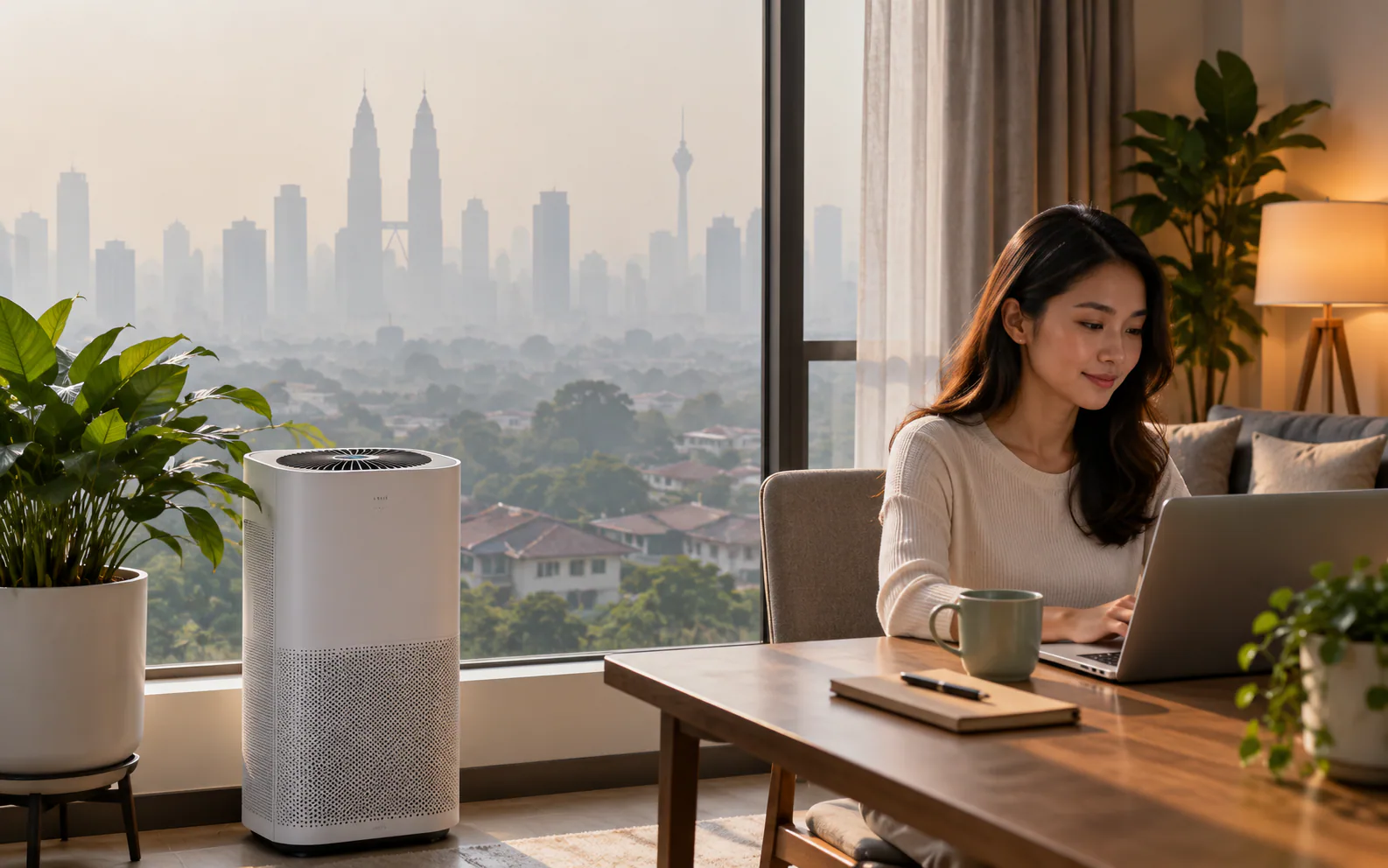
Malaysia is experiencing another period of haze. On 1 October 2026, several areas in Peninsular Malaysia were still recording unhealthy Air Pollutant Index readings, including locations in Selangor. When outdoor air quality worsens, homes and businesses often focus on one question: what can we realistically do about the air indoors?
Quick Answer: What Should You Do During Haze?
Monitor the current API for your area, reduce unnecessary exposure when readings are poor, keep outdoor pollution from entering unnecessarily, maintain suitable ventilation when outdoor air is cleaner, and use appropriate particle filtration as a supplement. Air purification can help reduce certain airborne particles, but it does not remove every pollutant and should work alongside source control and ventilation.
In short:
- Check the current API for your area
- Reduce unnecessary exposure when readings are poor
- Keep polluted outdoor air out where practical
- Ventilate when outdoor air is cleaner
- Use suitable particle filtration as a supplement, not a replacement
What Is the Air Pollutant Index?
Malaysia’s Air Pollutant Index, or API, is used to communicate ambient air quality. Readings can change throughout the day depending on weather, wind and pollution levels, so people should check current information rather than rely on yesterday’s conditions.
Check current readings on the Department of Environment’s official EQMS portal or its MyJAS EQMS app rather than third-party readings, which can use a different scale.
API Readings at a Glance
The Department of Environment groups API readings into five categories:
| API reading | Category |
|---|---|
| 0–50 | Good |
| 51–100 | Moderate |
| 101–200 | Unhealthy |
| 201–300 | Very unhealthy |
| Above 300 | Hazardous |
Why Haze Matters Indoors Too
Outdoor particulate pollution can enter buildings through doors, windows, gaps and ventilation systems. Indoor air also has its own pollutant sources from cooking, cleaning, furnishings and activities. This means indoor air quality during haze depends on both outdoor conditions and what is happening inside the building.
1. Monitor Outdoor Conditions Before Opening Up the Building
Ventilation is important, but during heavy haze it may not make sense to bring large amounts of polluted outdoor air indoors. Check the local API and adjust ventilation practices according to the building, occupancy and current outdoor conditions.
2. Reduce Indoor Pollution Sources
Avoid unnecessary activities that add particles or smoke indoors. Cooking, smoking, burning materials and certain cleaning activities can add to indoor pollutant levels. Source control is one of the most effective ways to improve indoor air.
3. Use Suitable Particle Filtration
Portable air cleaners and HVAC filters can reduce indoor particulate pollution when properly selected and maintained. For particle removal, equipment should be appropriately sized for the room or area. Filters also need regular replacement or maintenance because an overloaded filter will not perform well.
4. Do Not Expect One Device to Remove Everything
Different air-cleaning technologies target different pollutants. A particle filter may reduce airborne particles but may not remove gases or every type of contaminant. Product specifications should be checked so the solution matches the actual requirement.
5. Think About High-Traffic Indoor Spaces
Offices, hotels, reception areas, meeting rooms and other high-traffic spaces can have changing occupancy and air quality throughout the day. A managed air-care plan should consider room size, airflow, occupancy, filtration and maintenance rather than simply placing a small purifier in a large space.
6. Maintain Ventilation and Air-Care Equipment
Filters, air-cleaning equipment and ventilation systems need maintenance to perform as intended. Malaysia’s Ministry of Health provides guidance on ventilation and indoor air quality for residential, public and non-residential settings, reinforcing that indoor air quality should be managed as a system rather than through a single device.
Can an Air Purifier Help During Haze?
A suitable air purifier can help reduce certain airborne particles when it is correctly sized and operated, especially when outdoor air quality limits the amount of clean outdoor ventilation available. It should be treated as a supplement to source control, good ventilation practices and routine cleaning rather than a complete solution on its own.
What Should Businesses Consider?
Start with the space: floor area, occupancy, operating hours, ventilation system and the type of air-quality concern. Then determine whether portable air cleaners, HVAC filtration or other air-care solutions are suitable. In larger commercial environments, one small unit may not provide meaningful coverage for the whole premises.
Managing Indoor Air During Haze
LBS Group provides professional air-care solutions for homes and businesses. During haze periods, the goal is not to promise perfectly clean air but to reduce avoidable indoor pollution and use suitable filtration as part of a broader indoor air-quality approach.