How Often Should a Commercial Kitchen Be Deep Cleaned?
1 October 2026
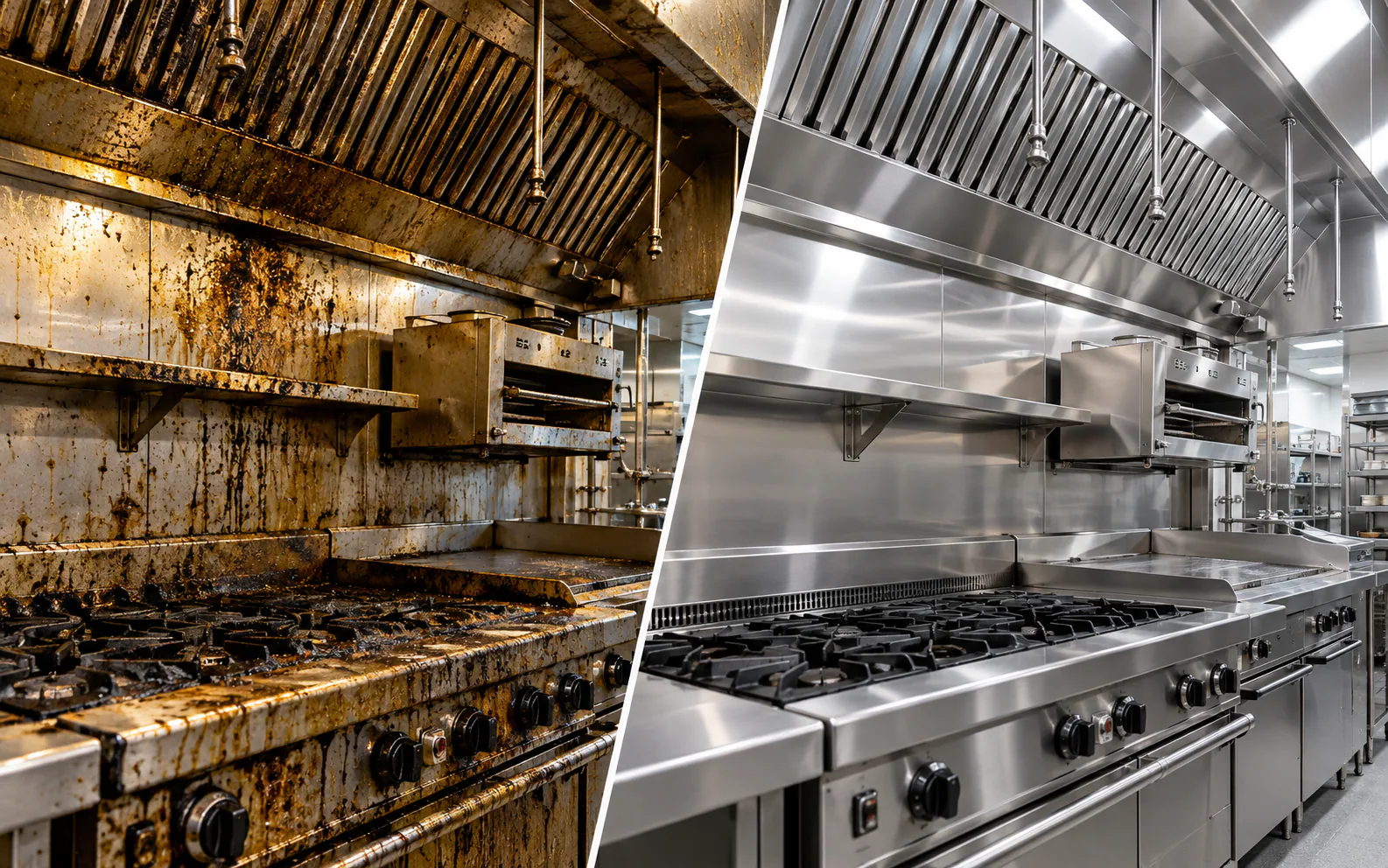
There is no single deep-cleaning schedule that fits every commercial kitchen. A small café with light cooking does not create the same grease load as a high-volume restaurant, hotel kitchen or central kitchen. The right frequency depends on cooking volume, operating hours, menu, ventilation system, grease production and the standard of daily housekeeping.
Quick Answer: How Often Should a Commercial Kitchen Be Deep Cleaned?
Daily cleaning should handle routine food residue and spills, while periodic deep cleaning should be scheduled before grease, carbon and residue become difficult to control. High-volume kitchens may need professional deep cleaning more frequently than lower-use sites. Grease traps and exhaust systems should be serviced according to actual build-up and site conditions rather than waiting for odour, overflow or reduced airflow.
Daily Cleaning Is Not the Same as Deep Cleaning
Daily kitchen cleaning focuses on immediate operational hygiene: wiping work surfaces, cleaning food-contact areas, mopping floors and managing waste. Deep cleaning addresses the build-up that routine housekeeping often cannot remove, such as baked-on grease around cooking lines, residue behind equipment and grease accumulation in exhaust components.
1. Kitchen Degreasing
Grease can accumulate on equipment exteriors, walls, floors, splash areas and surfaces around the cooking line. The heavier the cooking load, the faster this layer builds. Deep degreasing should be scheduled before deposits become thick, sticky or difficult to remove through routine cleaning.
2. Grease Trap Cleaning and Sanitisation
Grease traps collect fats, oils and grease before they enter the drainage system. When they are left too long, businesses may experience odour, slow drainage, overflow and excessive build-up. Cleaning frequency should be based on trap size, kitchen output and how quickly the trap fills.
3. Exhaust Hood and Filter Cleaning
Cooking produces airborne grease that can accumulate in hoods, filters and accessible ducting. Grease-coated filters can become harder to clean and may affect ventilation performance. Sites with heavy frying, grilling or wok cooking generally need more frequent attention than low-grease operations.
4. Floors Walls and Hard-to-Reach Areas
Routine mopping may not fully remove residue behind equipment, along wall edges or in corners. Periodic deep cleaning should include areas that are difficult to access during operating hours and where dirt can build gradually.
Signs Your Kitchen Needs Deep Cleaning Soon
Common warning signs include persistent grease film, baked-on deposits, recurring odours, slow drainage, grease trap overflow, visibly dirty hood filters and residue returning quickly after normal cleaning. If these signs are present, the existing cleaning frequency may be too low for the actual kitchen load.
How to Set the Right Cleaning Frequency
Start with a site assessment. Consider operating hours, number of meals produced, cooking methods, grease generation, exhaust-system condition, grease-trap capacity and existing housekeeping. Then set a schedule and review it after several service cycles. If heavy build-up returns before the next visit, shorten the interval.
Why Scheduled Deep Cleaning Is Easier to Manage
Planned cleaning reduces the need to wait for visible problems. It also allows businesses to coordinate cleaning around quieter operating periods and keep service records for internal hygiene management.
Frequently Asked Questions
Is daily cleaning enough for a commercial kitchen?
Daily cleaning is essential but does not always reach heavy grease deposits, hidden areas, grease traps or exhaust components. Periodic deep cleaning complements routine housekeeping.
How do I know when a grease trap needs cleaning?
Odour, slow drainage, overflow and heavy grease accumulation are common warning signs. A planned servicing schedule is better than waiting for these problems.
How often should exhaust hoods be cleaned?
Frequency depends on cooking volume and grease production. High-grease cooking environments usually need more frequent inspection and cleaning.
What is included in commercial kitchen deep cleaning?
Depending on the service scope, it may include kitchen degreasing, exhaust hood and filter cleaning, grease trap cleaning and sanitisation, and cleaning of floors, walls and difficult-to-reach areas.
What affects commercial kitchen cleaning cost?
Kitchen size, grease level, equipment quantity, cleaning scope, exhaust-system condition, grease-trap requirements and service frequency all affect the quotation.
Need a Commercial Kitchen Cleaning Programme?
LBS Group provides kitchen degreasing, grease trap cleaning and sanitisation, and kitchen exhaust hood and filter cleaning for restaurants, hotels, central kitchens and other food businesses.