How to Choose the Right Termite Barrier for Malaysian Commercial Buildings
5 November 2026
Choosing the right termite barrier for a commercial building in Malaysia means matching the barrier type to the building design, site conditions and regulatory requirements, while ensuring ongoing monitoring and rapid response to any activity.
Understanding Termite Threats in Commercial Buildings
Termites are silent destroyers that can compromise foundations, columns and flooring of commercial premises, often going unnoticed until structural damage is evident. In Malaysia, subterranean termites (Coptotermes gestroi) are the most common species affecting high‑rise and low‑rise structures.
- They thrive in warm, humid environments and can travel up to 30 m underground.
- Damage is typically discovered through wood decay, hollow sounds or visible mud tubes.
- Early detection and a robust barrier are the most cost‑effective defence.
Official guidance on termite management in Malaysia can be found on the Department of Agriculture website【https://www.doa.gov.my】.
Types of Termite Barriers Available
Different barrier technologies address termite entry at various points of a building’s envelope. Selecting the appropriate system depends on construction methods, soil conditions and budget.
- Physical (Physical‑Membrane) Barriers – Stainless‑steel mesh or high‑density polyethylene sheets placed under slabs and around footings to block termite passage.
- Chemical (Termiticide) Barriers – Soil‑applied liquid termiticides that create a toxic zone around the foundation; often combined with pre‑construction treatment.
- Baiting Systems – Stations installed around the perimeter containing cellulose bait laced with a slow‑acting insecticide; termites feed and share the toxin.
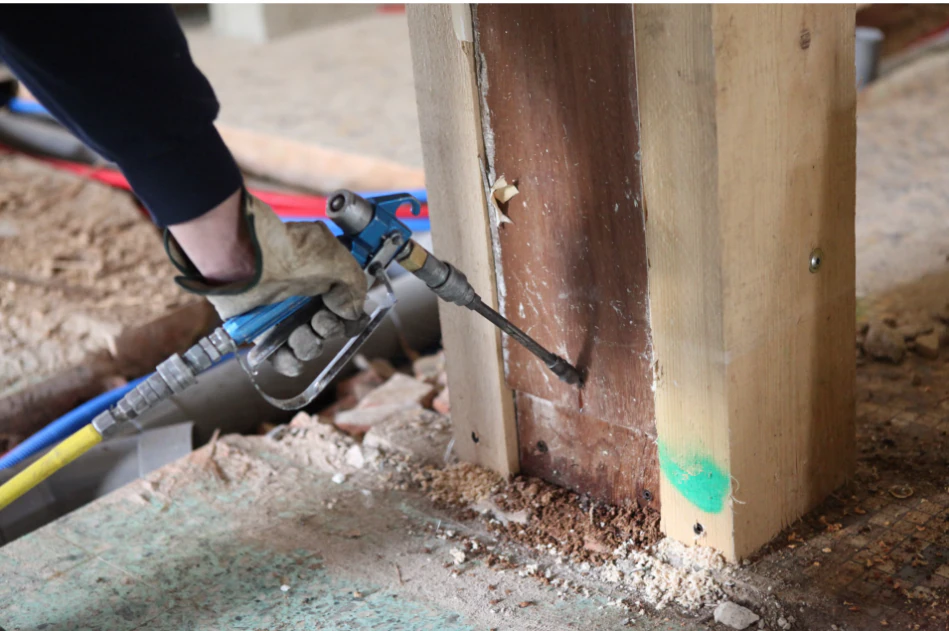
- Foam Barriers – Expanding polyurethane foam injected into the soil, sealing voids and creating a physical‑chemical barrier.
- Hybrid Solutions – Combination of physical mesh with chemical treatment for added redundancy.
LBS Group offers a dedicated Termite Control service that incorporates the chosen barrier and provides a digital service report after each visit.
Factors to Evaluate When Choosing a Barrier
Before committing to a solution, assess the following criteria to ensure the barrier aligns with the building’s long‑term performance.
- Construction Phase – Physical barriers are most effective when installed before concrete pours; chemical treatments can be applied both pre‑ and post‑construction.
- Soil Type & Moisture – Sandy or highly porous soils may leach chemicals quickly, favouring physical or foam barriers.
- Regulatory Compliance – Malaysian Standard MS 1525:2014 outlines acceptable termite control methods; verify the chosen product meets this standard.
- Maintenance Requirements – Baiting systems need regular inspection (typically quarterly) and replacement of bait stations.
- Environmental Impact – Consider low‑toxicity options if the site is near sensitive ecosystems or water sources.
- Budget and Lifecycle Cost – Up‑front costs differ; however, factor in inspection, monitoring and potential retreatment over the building’s lifespan.
Comparing Common Solutions
| Barrier Type | Installation Timing | Typical Cost (USD) | Maintenance Frequency | Best For |
|---|---|---|---|---|
| Physical Mesh | Pre‑construction | Medium | None after install | High‑rise, concrete slabs |
| Chemical Termiticide | Pre‑ or post‑construction | Low‑Medium | Annual soil testing | Sites with stable soil |
| Bait Stations | Post‑construction | Low | Quarterly inspection | Retro‑fit, large perimeters |
| Foam Barrier | Pre‑construction | Medium‑High | None after install | Irregular soils, void sealing |
| Hybrid | Pre‑construction | High | Depends on components | Critical infrastructure |
The table highlights that no single solution fits all projects; a hybrid approach often offers the highest protection level.
Role of Professional Service Providers
A qualified pest‑management partner brings expertise, regulatory knowledge and ongoing monitoring that DIY approaches lack. LBS Group’s integrated service model combines termite barrier installation with digital service reports, ensuring every visit is documented, observations are logged and corrective actions are tracked.
- Digital Service Reports – Every service visit is recorded, providing a clear audit trail for compliance.
- IoT Monitoring – While primarily for rodents, LBS’s IoT platform demonstrates the company’s commitment to real‑time pest surveillance, which can be extended to termite bait stations.
- Local Experience – Since acquiring Perfection Pest Management, LBS has deep familiarity with Malaysian building codes and soil conditions across Kuala Lumpur, Penang, Ipoh, Melaka, Johor and Pahang.
Engaging a professional also ensures the barrier is installed to manufacturer specifications, a requirement noted in the Malaysian Standard.
Sources and Further Reading
- US EPA: Termites — how to identify and control them
- US EPA: Integrated pest management (IPM) principles
Maintenance and Ongoing Monitoring
Even the strongest barrier can be compromised by construction modifications or unexpected soil movement. A proactive maintenance plan includes:
- Annual Inspections – Verify barrier integrity, especially after major renovations.
- Bait Station Checks – Replace or rebait stations every 3–4 months.
- Digital Reporting – Use LBS’s digital service reports to track trends and schedule preventive actions.
- Training Facility Staff – Teach staff to recognise early signs of termite activity (mud tubes, wood damage).
By coupling a robust barrier with scheduled monitoring, commercial owners can avoid costly structural repairs and maintain compliance with local standards.
If you need a customised assessment for your property, feel free to request a free inspection or reach us on WhatsApp at 0122950573.