How Hotels and Hostels in Malaysia Can Prevent and Manage Bed Bug Infestations
11 November 2026
Hotels and hostels in Malaysia can prevent and manage bed bug infestations by establishing daily housekeeping inspection protocols, training staff to recognise early warning signs, isolating suspected guest rooms immediately, and partnering with a licensed pest control specialist. Early detection stops pests from spreading between adjoining rooms, protecting your reputation and guest occupancy.
The Commercial Threat of Bed Bugs in Malaysian Hospitality
Bed bugs pose a severe commercial threat to Malaysian accommodation providers because a single negative online review detailing bites can permanently damage brand reputation, drive down room rates, and cause extended inventory downtime. With frequent international and domestic traveller turnover, tourist hubs in Kuala Lumpur, Penang, and Melaka face continuous introduction risks.
According to the World Health Organization, while bed bugs are not recognised vectors of human infectious disease, their bites cause severe itching, allergic reactions, secondary skin infections, and significant psychological distress for affected individuals. In the hospitality sector, the operational consequences include:
- Revenue loss from out-of-order rooms: Infested rooms and surrounding buffer rooms must be taken out of inventory during treatment, reducing available guest capacity.
- Cost of refunds and guest relocation: Operators must absorb immediate relocation expenses, medical bill reimbursements, and refund demands from affected guests.
- Reputational damage on booking platforms: Negative reviews on Google, TripAdvisor, and online travel agencies (OTAs) mentioning bed bugs deter prospective guests for months.
- Staff morale and replacement costs: Unaddressed bed bug issues cause operational friction, housekeeping complaints, and potential linen contamination.
To safeguard brand value, accommodation providers across the country—supported by specialised hospitality and hotel pest management—must shift from reactive problem-solving to structured prevention.
Early Signs of Bed Bugs: Daily Housekeeping Inspection Points
Housekeeping staff must identify early bed bug signs during routine room turnover, focusing on mattress piping, headboards, baseboards, electrical outlet plates, and bedside furniture joints. Detecting tiny black faecal spotting, shed exoskeletons, or live nymphs early prevents a minor introduction from escalating into an established multi-room infestation across the floor.
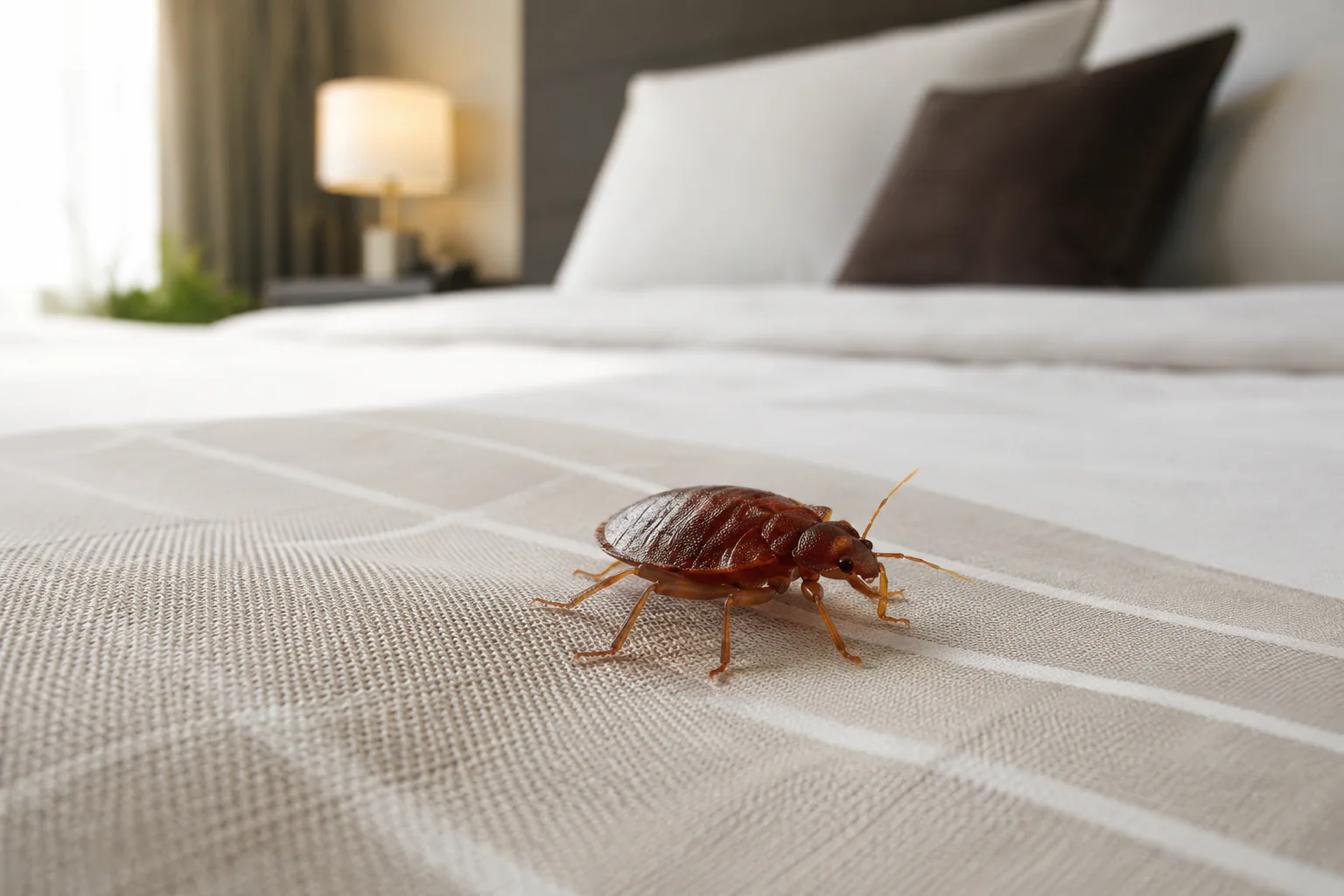
According to the Centers for Disease Control and Prevention, adult bed bugs (Cimex lectularius) are reddish-brown, oval, flattened insects about 5 millimetres long, while newly hatched nymphs are translucent and roughly the size of a pinhead. To identify infestations before guests notice them, train housekeeping teams to check these critical inspection zones:
- Mattress seams and piping: Strip linens fully and inspect along perimeter seams, tufting, corners, and internal brand tags.
- Bed bases and box springs: Check underneath fabric linings, wooden slats, screw joints, and castor wheel sockets.
- Headboards: Dismount or inspect behind wall-mounted headboards using a high-powered torch, paying close attention to wall anchors and screw holes.
- Skirting boards and carpet edges: Check the junction where the carpet meets the skirting board, particularly within a 1.5-metre radius of the bed.
- Upholstered seating and luggage racks: Examine fabric seams, cushion folds, and wooden frame crevices of armchairs, sofas, and foldable luggage stands.
Key physical indicators include:
- Faecal spotting: Tiny, dark brown or black specks resembling felt-tip pen marks on sheets, mattress surfaces, or wooden frames.
- Cast skins (exuviae): Pale yellow, empty exoskeletons shed during the five nymphal development stages.
- Blood spots: Unexplained rusty smears left on white sheets when engorged bugs are accidentally crushed during guest sleep.
- Sweet, musty odour: A distinct, sweet almond or coriander-like scent released by bed bug scent glands in severe infestations.
Immediate Containment: Protocol for Suspected Infestations
When a guest reports bed bugs or housekeeping identifies suspicious evidence, the accommodation operator must take the room out of service immediately, avoid shifting furniture, and establish a containment perimeter around adjacent units. Fast isolation prevents bugs from hitchhiking on cleaning equipment or migrating through pipe chases into neighbouring guest suites.
Follow these sequential operational steps:
- Step 1: Relocate the guest with discreet care. Move the guest to a new room at least two doors away or on another floor. Never move them to an adjacent or vertically aligned room. Inspect the guest’s luggage before transfer if permitted, or offer complimentary high-temperature laundering of worn clothing.
- Step 2: Quarantine the affected room immediately. Block the room in the property management system (PMS) as out-of-order. Do not permit housekeeping to perform regular cleaning, vacuuming, or linen stripping until a professional inspection occurs.
- Step 3: Seal all linens on-site. Housekeeping must bag all bed linens, duvet inners, and pillow protectors inside heavy-duty, water-soluble or heavy plastic laundry bags inside the room before transport. Tightly knot the bags so bugs cannot drop off in hallways or service lifts.
- Step 4: Wash linens at high temperatures. Launder infested linens using a hot-water cycle followed by hot tumble drying, ensuring fabric temperatures reach at least 60 degrees Celsius to kill all insect life stages and eggs.
- Step 5: Inspect adjacent buffer rooms. Immediately inspect the rooms directly to the left, right, across the hall, and directly above and below the affected room. Bed bugs readily travel through wall conduits and electrical chases.
Comparison: Hostel Dormitories vs. Boutique and Luxury Hotels
Hostels and hotels in Malaysia face differing levels of bed bug risk due to variations in guest turnover, luggage density, furniture designs, and daily operating budgets. Understanding these operational differences enables managers to apply targeted pest control measures suited to their specific property layout.
| Operational Factor | Hostels and Backpacker Dormitories | Mid-Scale and Luxury Hotels |
|---|---|---|
| Guest Turnover | High rotation; guests frequently arrive directly from budget transport, hiking trails, or other hostels. | Moderate rotation; guests include corporate travellers, families, and long-stay patrons. |
| Luggage Storage | Backpacks often placed on bunks, under beds, or directly on timber or concrete floors. | Suitcases placed on luggage racks, inside wardrobes, or on tiled foyer floors. |
| Bed Construction | Metal or timber bunk beds with multiple joints, hollow frames, and high-density foam mattresses. | Divan bases, plush upholstered headboards, box springs, and pocket-sprung mattresses. |
| Spread Vulnerability | Rapid spread across open shared dormitories with multiple beds in one room. | Slower spread, typically moving room-to-room through electrical conduits or shared service carts. |
| Primary Risk Driver | High luggage volume and communal sharing spaces. | Concealed structural harborage behind fixed decorative panels and headboards. |
| Monitoring Focus | High-frequency physical inspections of mattress seams and bunk frame joinery. | Regular preventive monitoring using specialised traps and thorough housekeeping checklists. |
Professional Treatment Protocols for Hospitality Properties
Professional bed bug management combines precise chemical residual applications, targeted steam or heat exposure, and mandatory follow-up inspections to break the pest’s reproductive cycle. Eradication requires targeting hidden harbourages without leaving hazardous residue that could affect future hotel guests.
Since 1998, LBS Group has grown into an integrated solutions provider with pest management operations across more than 30 cities and key regions in Asia, including branches in Kuala Lumpur, Penang, Ipoh (Perak), Melaka, Johor, and Pahang. In Malaysia, the acquisition of Perfection Pest Management strengthened LBS Group’s capabilities in providing comprehensive bed bug control services.
Professional treatments typically employ an integrated approach:
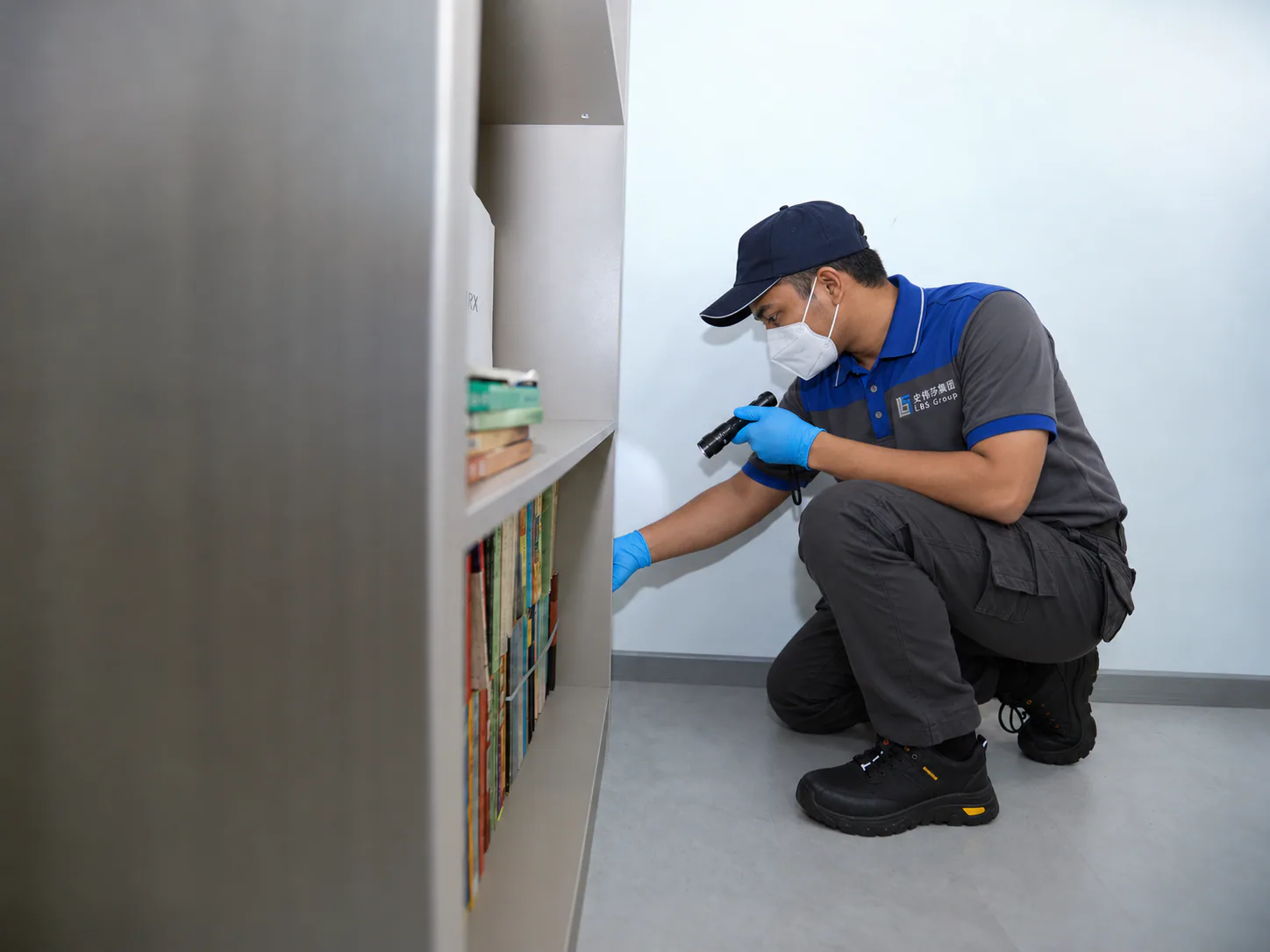
- Detailed barrier inspection: Technicians dismount fixtures, loosen baseboards, and inspect deep recesses using specialised detection tools.
- Targeted chemical applications: Residual formulations are applied into cracks, crevices, skirting board recesses, and bed frame joins where bed bugs shelter during daylight hours.
- Steam or thermal spot treatments: High-temperature steam penetrates deep into fabric seams and mattress corners, delivering lethal heat to heat-sensitive bed bug eggs.
- Follow-up inspection and treatment: Because bed bug eggs take roughly 6 to 10 days to hatch, a follow-up visit scheduled within 10 to 14 days is essential to eliminate newly emerged nymphs before they reach reproductive maturity.
Every LBS Group service visit is documented in a digital service report that details site observations, specific treatments applied, corrective housekeeping actions, and service history. This provides hotel general managers with transparent, auditable records for corporate brand compliance.
Preventive Best Practices for Malaysian Property Managers
Preventing bed bugs in Malaysian hotels and hostels requires continuous staff training, structured architectural precautions, and defensive purchasing choices when replacing furniture and guestroom textiles. Establishing robust preventive procedures reduces the frequency of pest introductions and minimises costly room downtime.
- Train housekeeping teams regularly: Conduct quarterly training sessions showing staff actual photos of bed bugs, cast skins, and faecal spotting. Housekeeping is your first line of defence.
- Install certified mattress encasements: Enclose all mattresses and box springs in certified bed-bug-proof encasements. Encasements eliminate deep mattress seams, trapping any existing bugs inside while making new pests easily visible on the smooth exterior.
- Choose practical furniture designs: Avoid hollow metal bunk frames with unsealed tubes, or ornate, deep-crevice wooden headboards. Opt for solid timber, sealed metal frames, and smooth, wipeable headboard surfaces where possible.
- Keep housekeeping carts outside guest rooms: Instruct housekeepers to leave supply carts in the hallway. Never bring clean linens into an uninspected room, and never rest dirty linens directly on the hallway carpet.
- Audit shared laundry procedures: Ensure commercial laundry contractors adhere to minimum washing and drying temperature standards to neutralise potential pest transfers across properties.
Request a Professional Bed Bug Inspection
Protect your hotel or hostel from negative guest reviews, operational disruption, and costly room downtime. Contact the LBS Group team to request a free inspection or speak with our hospitality pest management team directly via WhatsApp on 0122950573.