
7 Signs of a Termite Infestation in Your Home or Business
12 June 2026
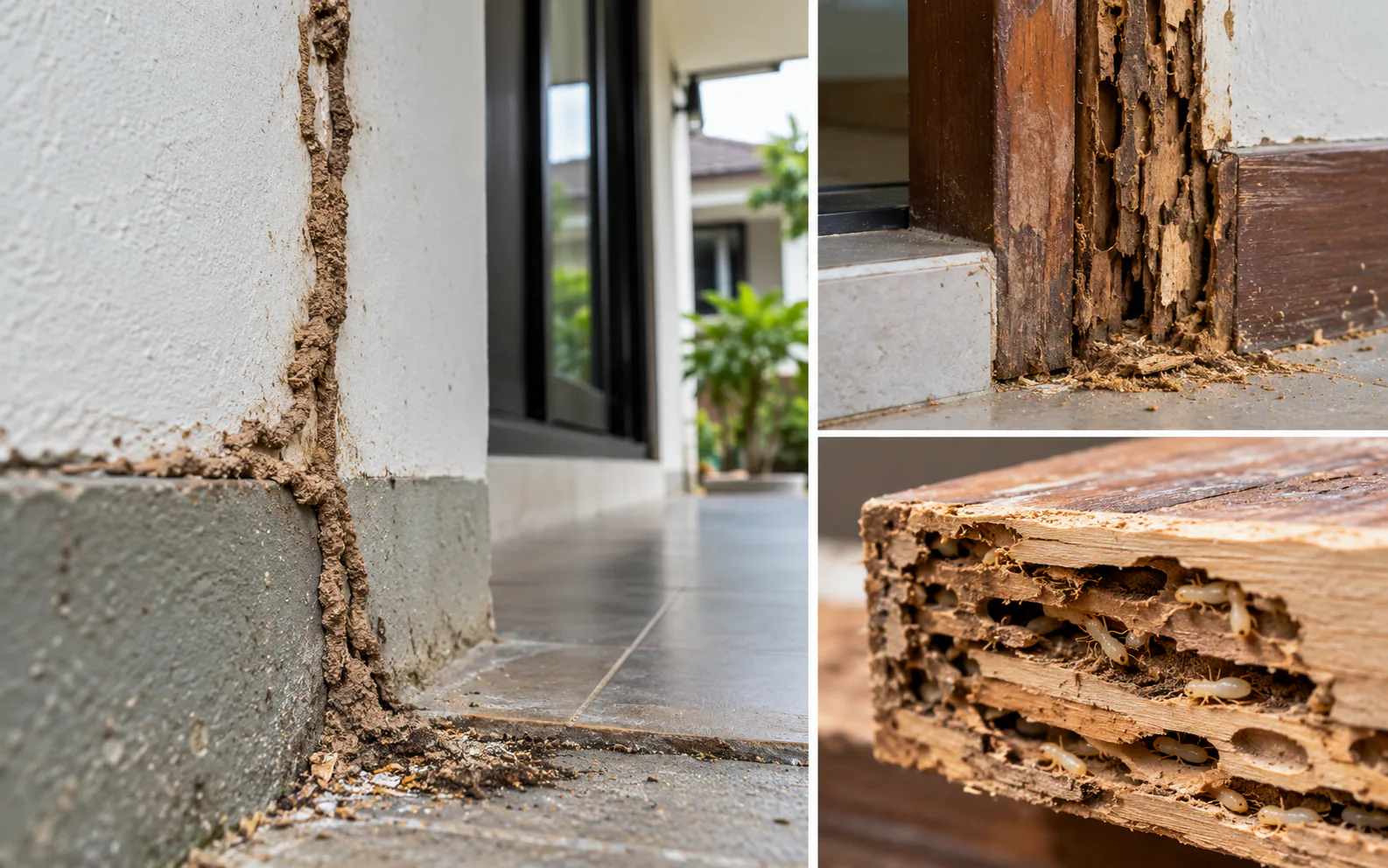
Termites are one of the easiest structural pests to miss because much of their activity happens out of sight. They can travel through soil and concealed routes before reaching timber inside a building, so the first visible sign may appear only after activity has been present for some time. In Malaysia’s warm and humid climate, property owners should take suspicious signs seriously rather than waiting for obvious damage.
Quick Answer: What Are the Main Signs of Termites?
The most common warning signs are mud tubes, hollow or weakened timber, internal galleries in wood, flying termites, discarded wings, blistered or damaged wooden surfaces and live termites. One sign alone may not confirm an active infestation, but several signs together are a strong reason to arrange an inspection.
Check for these seven signs:
- Mud tubes along walls, foundations or pipes
- Wood that sounds hollow or feels weak
- Tunnels or galleries inside exposed timber
- Flying termites (swarmers), especially indoors
- Discarded wings near windows, doors or lights
- Blistered, darkened or damaged wooden surfaces
- Live termites inside wood or mud tubes
1. Mud Tubes Along Walls or Foundations
Subterranean termites build narrow mud or shelter tubes that help them move between the soil and a food source while remaining protected from light and dry air. These tubes may appear along foundations, walls, columns, skirting, pipe penetrations or cracks. If you find one, avoid assuming the problem is solved simply because the visible tube is removed. The termite network may continue behind the wall or below the floor.
Extension specialists at Mississippi State University also list mud tubes among the clearest signs of subterranean termite activity.
2. Wood Sounds Hollow or Feels Weakened
Termites can feed inside timber while leaving a thin outer surface intact. Affected wood may sound hollow when tapped, feel softer than normal or break more easily. Door frames, skirting, built-in cabinets and other timber elements are worth checking when termite activity is suspected.
3. Tunnels or Galleries Inside Timber
If damaged timber is exposed, you may see internal channels or galleries where termites have been feeding. Because these galleries can remain hidden behind the surface, the amount of internal damage may be greater than the visible exterior suggests.
4. Flying Termites or Swarmers
Winged reproductive termites, often called swarmers or alates, leave mature colonies to establish new ones. Seeing flying termites outdoors does not automatically mean the building itself is infested ,but repeated swarming indoors or around windows and lights should be investigated.
5. Discarded Wings Near Windows or Doors
After swarming, reproductive termites shed their wings. Small piles of wings near windows, doors, lights or floors can indicate that a swarm recently occurred nearby. Flying termites are sometimes confused with flying ants, so correct identification matters before deciding on treatment.
Flying Termites or Flying Ants?
Flying termites are often mistaken for flying ants. The US Environmental Protection Agency gives two quick ways to tell them apart in its guide Termites: How to Identify and Control Them:
| Feature | Termite swarmer | Flying ant |
|---|---|---|
| Wings | Two pairs of roughly equal length | Front wings longer than the hind wings |
| Antennae | Straight, may droop | Bent at about a right angle |
If you are unsure, keep a sample or a clear photo for the inspector.
6. Blistered or Damaged Wooden Surfaces
Termite-damaged timber can sometimes look darkened, blistered, thin or slightly warped. These symptoms are not unique to termites because moisture and age can create similar effects. However, when surface damage appears together with mud tubes, swarmers or hollow timber, a closer inspection is recommended.
7. Live Termites Inside Wood or Mud Tubes
Finding live termites is one of the clearest signs of active activity. Pale worker termites or darker-headed soldiers may be visible if an active tube or damaged section of timber is opened. The location where termites are found may not reveal the full extent of the colony or its entry route.
Why Termite Activity Can Be Difficult to Detect
Subterranean termites spend much of their time concealed. They may travel from soil through hidden entry points and shelter tubes before reaching timber inside a structure. That means the place where damage is visible may not be the point where termites entered the building.
What Should You Do If You Find Signs of Termites?
First, avoid relying only on surface treatment. Second, arrange a professional termite inspection so the affected areas and likely access routes can be assessed. Depending on the property and the activity found, a termite management programme may involve baiting, soil treatment, targeted treatment and ongoing monitoring. Follow-up is important because visible activity disappearing does not always mean the problem has been fully resolved.
Can You Treat Termites Yourself?
Products that kill visible termites may not control the hidden infestation or protect the structure. Structural termite treatment often requires knowledge of termite biology, building construction, product placement and follow-up monitoring. For repeated signs such as mud tubes, indoor swarms or timber damage, professional assessment is the safer next step.
Concerned About Termites?
If you have noticed mud tubes, flying termites or suspicious timber damage, LBS Group can inspect the property and recommend an appropriate termite management programme based on the activity and site conditions.