Night-Time Closing Checklist for Restaurants: Keeping Rats and Cockroaches Out After Hours
20 November 2026
A good night-time closing checklist removes the three things rats and cockroaches come for after hours: food, water and a way in. Before the last person leaves, put every scrap of food away, clean the kitchen and drains, close floor traps properly, and shut doors and roller shutters fully. Then record the checks so you can prove it.
Why are Malaysian restaurants being closed over rats and cockroaches?
Health and council officers can order food premises to close temporarily when they find evidence of pests, such as rat droppings, live cockroaches or missing pest control records. In 2026, 177 food premises in Penang were ordered to close, and further closures followed in Puchong, Hulu Selangor and Kota Kinabalu.
The Penang figure covers inspections by the state health department from January to April 2026, and pest control problems, chiefly rats, were the most common reason. In Puchong, council inspectors cited rat droppings, poor food storage and a failure to keep pest control records or put pest management measures in place.
Pests are not the only trigger. A public health reminder published by the National Security Council (MKN) points out that dirty kitchens, cross-contamination, unsafe food storage temperatures and food handlers without typhoid vaccination can also lead to action. But rats and cockroaches are the issue most closely tied to what happens at night:
- Both are mostly active in the dark, quiet hours after staff leave.
- Whatever they find overnight (crumbs, open bins, standing water) is what keeps them coming back.
- The droppings and damage they leave behind are what an officer sees on a morning inspection.
The legal framework for food premises hygiene sits mainly in the Food Act 1983 and the Food Hygiene Regulations 2009, alongside your local council’s licensing conditions. Check the current official requirements with the Ministry of Health and your local authority. For the enforcement side, see our guide on what leads to a Section 11 closure under the Food Act 1983 and what to fix first.
What should be on a restaurant’s night-time closing checklist?
A practical closing checklist covers four areas in a fixed order: food, waste, cleaning (including drains and floor traps) and the building shell (doors, shutters and gaps). Make each item a yes/no check that the closing supervisor signs, so nothing depends on memory at the end of a long shift.
Step 1: Put all food away
Our technicians advise customers to make sure no food is left out. In practice, that means:
- Every container lidded or sealed, including sauces, curry pastes and cut garnishes at the line.
- Dry goods (rice, flour, sugar, noodles) in sealed hard containers, off the floor.
- No trays of prepped ingredients left on counters “for the morning”, even under cling film.
- Front-of-house cleared: condiment caddies, sugar pots, cake displays and drink stations emptied or covered.
- Staff meals, snacks and drinks removed from lockers, drawers and the office.
Step 2: Deal with the rubbish
- Tie off bin bags and take them to the designated bin area before closing.
- Keep bins lidded, with no bags left beside them or outside the back door overnight.
- Wipe bin lids and rims, and rinse spills from the bin area floor.
- Cap used cooking oil containers and store them away from the kitchen door.
Step 3: Clean the kitchen every day
Our technicians’ written advice is to clean every day, especially the kitchen. Focus on the places pests feed when nobody is looking:
- Under and behind fryers, stoves, fridges and shelving, not just the visible floor.
- Grease on hoods, splashbacks and equipment sides.
- Food debris in gaps between tables and walls.
- Standing water: wipe sinks and counters dry, report dripping taps, and hang mops and cloths to dry rather than leaving them in buckets.
The WHO’s Five Keys to Safer Food programme, a food-handling message used worldwide, starts with keeping clean, and a clean kitchen at closing time is where that begins.
Step 4: Close floor traps properly
This is another point our technicians write into their advice for customers. Floor traps get their own section below because they are so often missed.
Step 5: Close doors and roller shutters at night
Our technicians also advise closing doors and roller shutters at night. Bring shutters fully down to the floor, close and lock back doors, and remove any door wedges. Close windows and vents that are not screened.
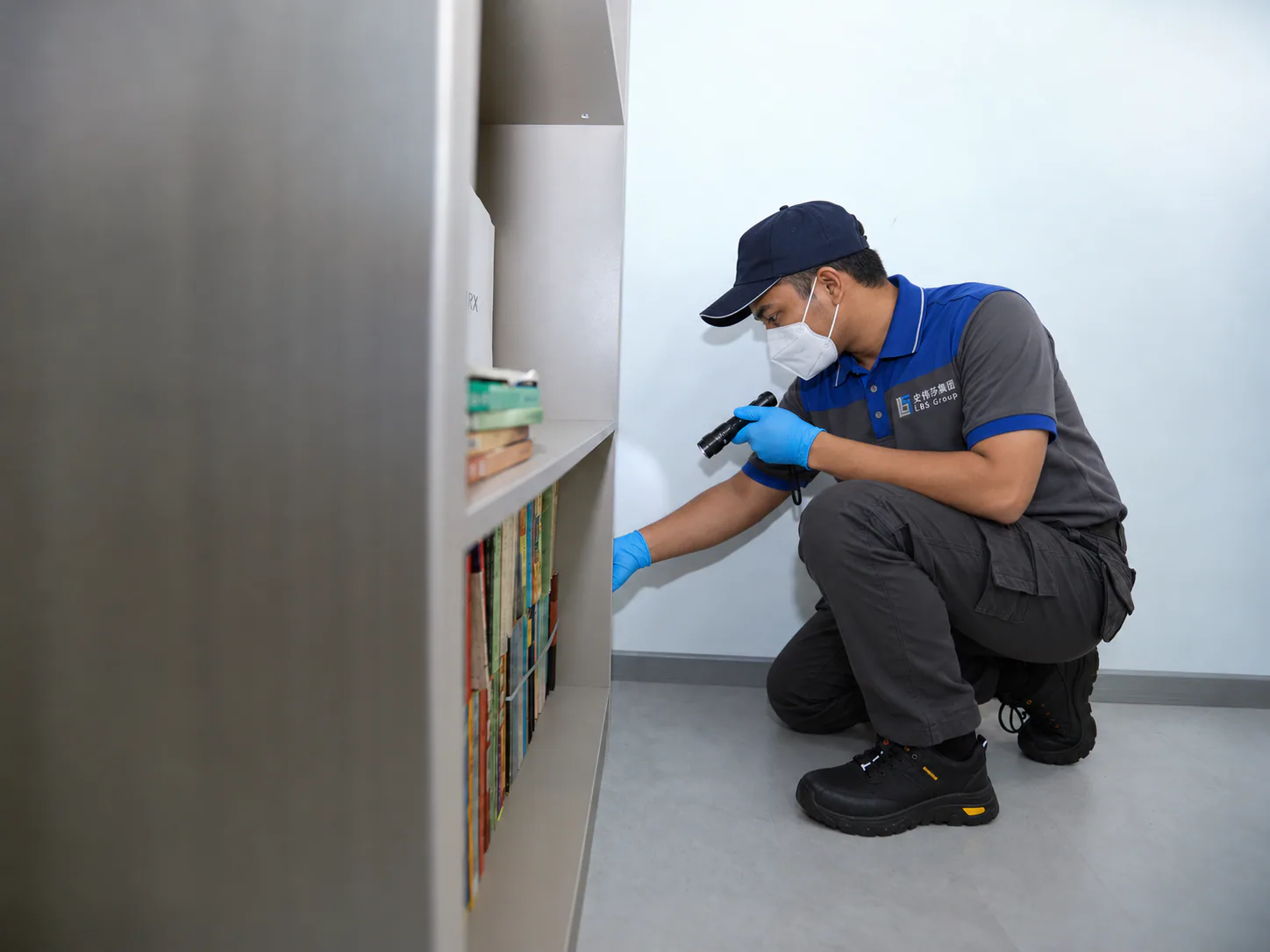
Step 6: Walk round with a torch and sign off
Do a final walk through the kitchen, store and dining area. Look for fresh droppings, gnawed packaging or live cockroaches, write down what you find, and report it to your pest control provider the next day.
Why do floor traps and drains matter so much after hours?
Floor traps and drains connect your kitchen to the wider drainage system, and they stay damp and coated with food residue. Cockroaches shelter and feed in them, and rats can travel along drainage lines. An open, broken or neglected floor trap left overnight is effectively an unguarded entrance into your kitchen.
At closing time:
- Check that every floor trap cover is in place, seated flat and not cracked or missing.
- Empty and rinse debris baskets so no food sits in the drain overnight.
- Run water through traps that are rarely used, so they do not dry out.
- Scrub drain channels and grates as part of the daily clean, not only during deep cleans.
- Report broken covers and gaps around drain pipes for repair rather than leaving them for “later”.
Grease traps should also be maintained on the schedule set by your landlord, council or service provider. A neglected grease trap is a steady food source for pests.
Which closing mistakes let pests in, and what should you do instead?
Most after-hours pest problems come from small habits rather than one big failure: a shutter left part-open, a bag of rubbish by the back door, or a tray of food left out. The table below sets out common closing mistakes and the simple fix for each.
| Common mistake | Why it helps pests | What to do instead |
|---|---|---|
| Roller shutter left partly up for air | Gives rats a direct way in from the back lane | Close it fully; use screened vents for airflow |
| Back door propped open while rubbish goes out | Leaves the kitchen open at the busiest pest time | Take rubbish out, then close and lock the door |
| Rubbish bags left outside until morning | Attracts rats to the door you use every day | Use lidded bins in the designated bin area |
| Food left on counters under cling film | Cling film does not stop rats or cockroaches | Store in sealed containers or the chiller |
| Floor trap covers left off after cleaning | Opens a route from the drains | Refit every cover before the lights go off |
| Wet mops and puddles left out | Provides water through the night | Dry floors, sinks and mops before leaving |
| Cardboard cartons stored overnight | Offers cockroaches shelter | Unpack deliveries and remove cartons the same day |
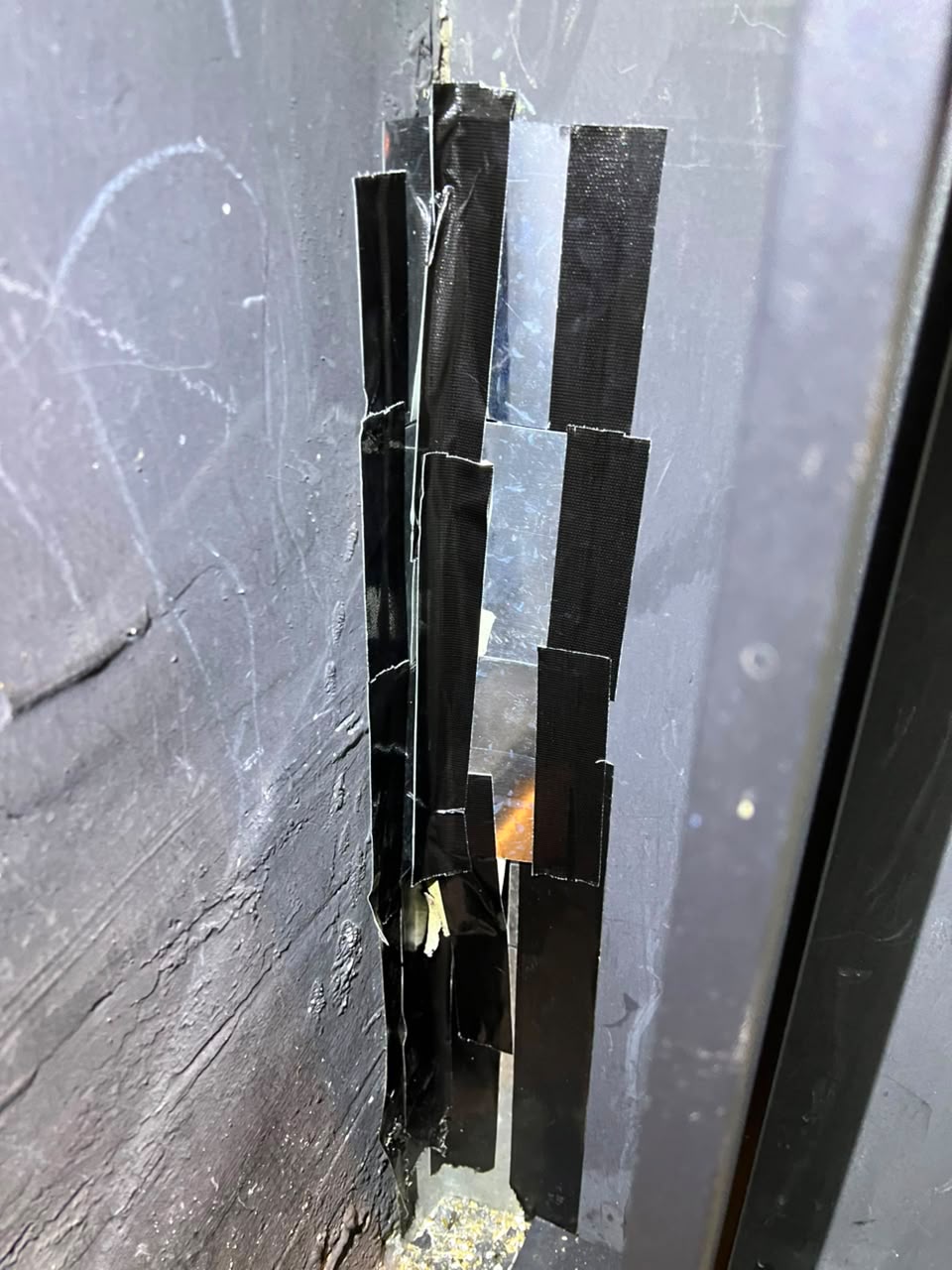
Gaps are the other weak point. Look for openings under doors, around pipes and cables entering the kitchen, and in false ceilings, and get them sealed. If you are not sure whether you have rats yet, read how to detect rodent activity before you see a rat.
When does a restaurant need professional pest control as well as a closing routine?
A closing routine cuts off food, water and entry points, but it cannot remove an infestation already living in wall voids, ceilings, drains or equipment. If you still find droppings, gnaw marks or live cockroaches in the morning despite a good routine, you need a professional inspection, targeted treatment and a documented programme.
Signs that it is time to call in professionals:
- Fresh droppings or grease smear marks along walls after a clean night.
- Gnawed packaging or chewed cables.
- Cockroaches seen during the day, or egg cases behind equipment.
- Activity returning within days of DIY spraying.
Professional rodent control and cockroach control programmes combine targeted treatment, monitoring and proofing advice. LBS Group is a member of the Malaysia Pest Management Association (MPMA) and is ISO 9001 Quality Management certified.
Records matter as much as treatment, because inspectors may ask for them. Every LBS Group service visit is recorded in a digital service report covering service details, site observations, corrective actions and service history, which gives you a clear paper trail for your premises.
For premises where rats are active overnight, our IoT Rodent Management Series combines smart infrared sensors, smart rodent traps with real-time notifications, frequency-based repellent devices and digital activity reporting, so you can see what happens after closing instead of guessing.
Need help keeping pests out of your restaurant after closing?
LBS Group has worked in professional pest management since 1998 and serves F&B outlets, hotels and factories, with branches in Kuala Lumpur, Penang, Ipoh (Perak), Melaka, Johor and Pahang. Our team can review your premises, point out entry points and weak spots, and set up a programme that fits your closing routine.
Request a free inspection, WhatsApp us on 0122950573 or email admin@lbsgroup.com.my. Our office hours are Monday to Friday, 9:00 AM to 6:00 PM, and Saturday, 9:00 AM to 1:30 PM.