Pest-Proofing Shops and Restaurants Before the Northeast Monsoon: Where to Seal Gaps
26 November 2026
To pest-proof a shop or restaurant before the Northeast Monsoon, find and close every gap that rats and cockroaches use. Check under doors and roller shutters, holes in the dining area, openings around warehouse pipes and wire trunking, and gaps in selling-floor ceilings. Use gnaw-resistant materials, mesh off shared ceiling voids and back the repairs up with daily cleaning.
Why do rats and cockroaches move indoors during the Northeast Monsoon?
Continuous heavy rain floods drains, burrows and outdoor hiding places. Rats and cockroaches then look for dry shelter close to food. Shops and restaurants offer warmth, food waste and hidden voids. Any gap at ground level, along building services or in the ceiling becomes a way in, so proofing pays off most before the wettest weeks.
The Malaysian Meteorological Department generally describes the Northeast Monsoon as the season of heavy rain that runs from around November to March. Check the latest forecasts and warnings on the MetMalaysia website. If you have not proofed your premises yet, start now. Then build the check into your calendar each year before the rains begin.
Wet weather changes conditions inside a building in several ways:
- Drains run full. Rats and cockroaches living in drains and sewer lines are pushed up towards floor traps, gullies and back lanes.
- Doors stay open longer. Deliveries and rubbish runs happen under awnings, and staff often prop back doors open while they shelter from the rain.
- Buildings deteriorate. Water swells door frames, rots seals and makes ceiling boards sag, which opens new gaps.
Where do rats and cockroaches get into shops and restaurants?
Most entry points are ordinary building gaps rather than dramatic holes. Look at the space under doors and roller shutters, holes behind dining-area fittings, openings where pipes and wire trunking pass through walls, and gaps in false ceilings. Floor traps and drains are another common route. Rats travel along services, while cockroaches squeeze into almost any crack.
Our service reports from Melaka (October 2026) and Johor (September 2026) record the same advice to customers more than once. Our technicians advised them to close gaps and holes at doors, in the dining area, around pipes in the warehouse, around wire trunking, and in the ceiling of the selling floor. Use the table below as a walk-round checklist.
| Entry point | What to look for | How to close it |
|---|---|---|
| Front and back doors | Daylight under the door, worn or chewed sweeps, gnaw marks on the bottom edge | Fit a metal kick plate or a metal-backed door sweep, and add a self-closer so the door does not stay open |
| Roller shutters | Gaps under the bottom rail, bent slats, open side guides | Repair the slats, fit a bottom seal or brush strip, and close shutters fully at night |
| Dining area | Holes behind fixed seating, gaps at skirting, openings around air-conditioning drain pipes and wall fittings | Fill small cracks with sealant, and pack larger holes with stainless steel wool before sealing |
| Warehouse pipes | Gaps where water, waste or gas pipes pass through walls and floors | Pack the gap with stainless steel or copper wool, seal over it and fit a metal collar where possible |
| Wire trunking | Open trunking ends, missing lids, cut-outs where cables enter the ceiling | Fit end caps and lids, and seal around cable entry points |
| Selling-floor ceilings | Missing or displaced tiles, gaps around lights and diffusers, stained or sagging boards | Replace damaged tiles, close the openings and mesh off the ceiling void |
| Floor traps and drains | Missing, loose or broken covers | Close floor traps properly and replace broken grates |
| Back entrance and refuse area | Door gaps near bins, spilt waste, broken bin lids | Close the door gap, keep the bin area clean and keep the lids shut |
What should you use to seal gaps that rats and cockroaches use?
Use materials that rodents cannot chew through, such as metal mesh, sheet metal, stainless steel wool and cement. Add sealant to stop cockroaches. Rats and mice can squeeze through surprisingly small openings and gnaw soft materials. Treat every gap near food, waste or services as a possible entry point.
The US Centers for Disease Control and Prevention’s guidance on rodents recommends sealing holes inside and outside buildings to keep rodents out. That advice is the basis of any proofing plan. In Malaysian shop lots and restaurants, keep these points in mind:
- Services are highways. Rats climb along cables, pipes and conduit and can scale rough walls.
- Soft materials fail. Rubber, vinyl, plastic and wood can all be gnawed, so a soft door sweep on its own rarely lasts.
- Some fillers break down. Exposed expanding foam is easily chewed, and plain steel wool rusts in damp conditions.
| Material | Best used for | Watch out for |
|---|---|---|
| Stainless steel or copper wool plus sealant | Small gaps around pipes and cables | Plain steel wool rusts in damp conditions |
| Galvanised wire mesh | Vents, ceiling voids and larger openings | Fine mesh reduces airflow, so keep ventilation working |
| Galvanised sheet metal or metal kick plates | Door bottoms and gnawed edges | Must fit tightly against the door |
| Cement mortar | Holes in walls and floors, broken skirting | Needs time to cure, so schedule the work outside trading hours |
| Silicone or acrylic sealant | Hairline cracks used by cockroaches | Does not resist gnawing on its own |
| Expanding foam | Filling voids behind a metal barrier | Rats chew through it if it is left exposed |
Do not seal a hole that rodents may still be using until the activity has been identified and dealt with. Sealing rats inside can drive them deeper into walls and ceilings.
How do you pest-proof a shop or restaurant step by step?
Work from the outside in. Survey the premises after closing and mark every gap. Deal first with the gaps nearest food and waste, and seal them with gnaw-resistant materials. Check the work again at night. Pair the repairs with a closing routine so pests have neither a way in nor a reason to stay.
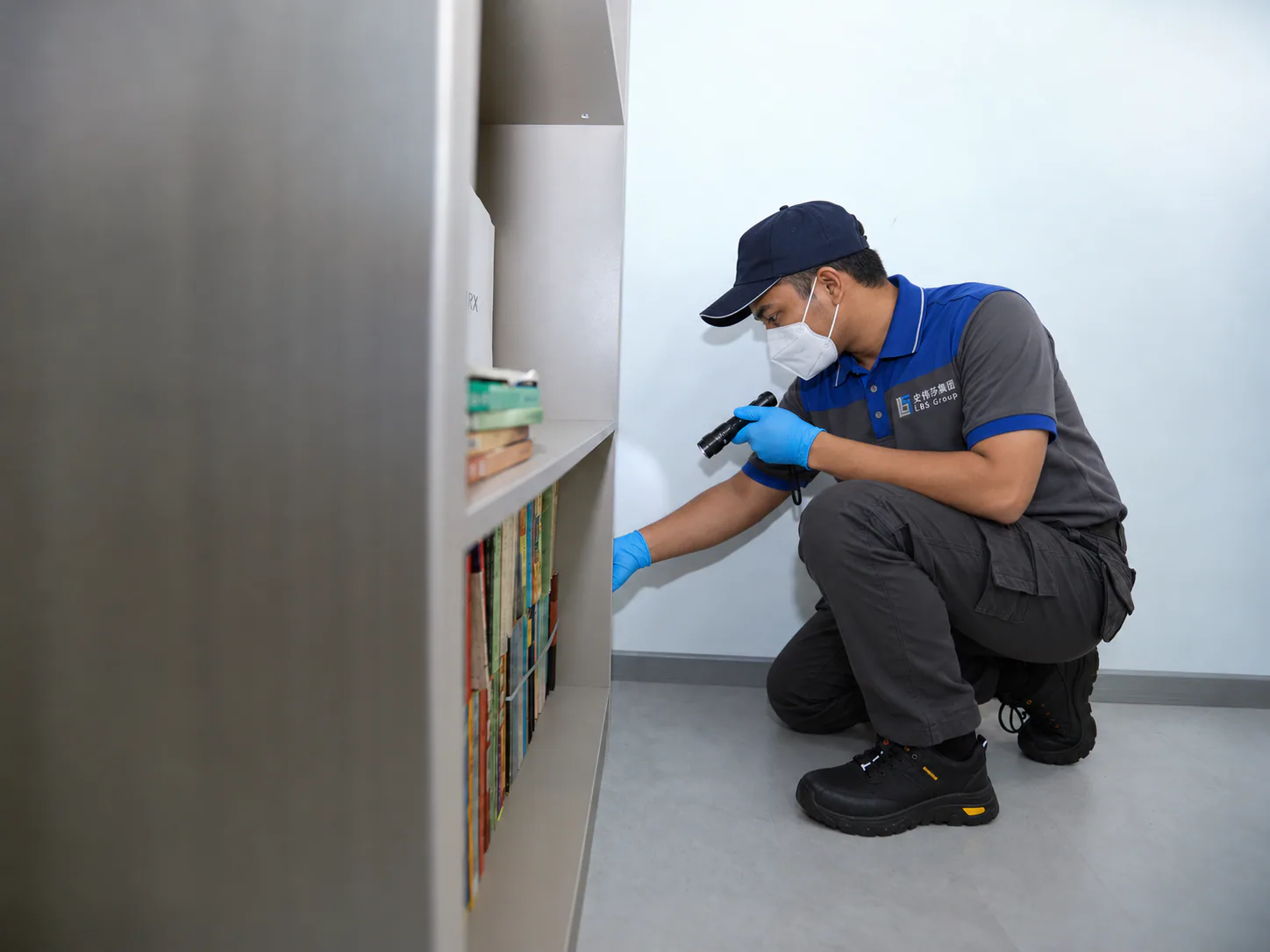
Step 1: Walk the building at night. Use a torch to look for droppings, grease marks along walls, gnawed edges and light showing under doors. Our guide to spotting rodent activity before you see a rat explains each sign.
Step 2: Follow the services. Trace pipes and wire trunking from where they enter the building to where they end, whether in the warehouse, kitchen or ceiling. Every wall they pass through is a possible gap.
Step 3: Lift the ceiling tiles. Check above the selling floor, storeroom and kitchen for droppings, chewed cables and open routes between rooms.
Step 4: Prioritise. Fix the back entrance, refuse area, kitchen and storeroom first. Then move on to the dining area and selling floor.
Step 5: Seal and repair. Use the materials in the table above. In rented units and shopping malls, agree any structural work with your landlord or building management before you start.
Step 6: Close floor traps and drains properly. Replace missing covers and keep them closed outside cleaning times.
Step 7: Set a closing routine. Shut doors and roller shutters fully at night, put lids on all bins and leave no food out. Our night-time closing checklist for restaurants covers each step.
Step 8: Recheck after storms. Look at door seals, ceilings and drains after heavy rain, because water damage opens new gaps.
Why fit netting between the selling-floor ceiling and the back storeroom?
In many shop lots, the false ceiling is one continuous void that links the selling floor, the storeroom and sometimes the kitchen. Rats use it as a hidden corridor above customers’ heads. Mesh across the void breaks that route, so a rodent that gets in at one end cannot reach stock or food at the other.
Our technicians have advised customers to install netting from the selling-floor ceiling through to the back storeroom. Keep these points in mind when you plan similar work:
- Choose gnaw-resistant mesh. Galvanised wire mesh lasts far longer than soft plastic netting, which rats can chew.
- Seal the crossing points. Close the gap wherever pipes or trunking pass through the mesh. Otherwise the barrier only partly works.
- Keep access for maintenance. Air-conditioning, electrical and plumbing contractors still need to reach the void, so include hinged or removable panels.
- Check fire-safety requirements first. Ceiling voids may contain sprinklers, detectors or fire barriers. Ask your building management and check the current requirements with the relevant authorities before you change anything above the ceiling.
Is sealing entry points enough to keep pests out?
No. Proofing reduces the number of pests that get in, but it cannot make a building pest-free. Rodents can gnaw new holes, and cockroaches arrive in cartons and deliveries. Proofing works best as one part of integrated pest management, alongside daily cleaning, monitoring and targeted treatment by trained technicians.
Commercial premises rarely deal with just one pest. In our own service reports, cockroaches were treated at 45 of 46 commercial premises, ants at 44, and rats or mice at 43. A proofing plan should therefore sit alongside cockroach control and rodent control, not replace them.
Practical ways to support your proofing work:
- Monitor rather than guess. Our IoT Rodent Management Series combines smart infrared sensors, smart rodent traps with real-time notifications, frequency-based repellent devices and digital activity reporting. It helps show whether activity drops after the gaps are closed.
- Keep a written record. Every LBS Group service visit is recorded in a digital service report. It covers service details, site observations, corrective actions and service history, so outstanding proofing work stays on the list.
- Clean every day. Focus on the kitchen and make sure no food is left out overnight.
- Check your obligations. Food premises in Malaysia are covered by the Food Act 1983 and the Food Hygiene Regulations 2009. Check the current requirements with the Ministry of Health and your local council.
For F&B operators, our food and beverage services combine pest management with kitchen hygiene support.
Sources and Further Reading
Ready to check your premises before the heaviest rain?
An outside inspection often finds the gaps your team walks past every day. LBS Group is a member of the Malaysia Pest Management Association (MPMA) and is ISO 9001 Quality Management certified. We have branches in Kuala Lumpur, Penang, Ipoh (Perak), Melaka, Johor and Pahang.
Request a free inspection or contact us on WhatsApp at 0122950573. You can also email admin@lbsgroup.com.my. Our opening hours are Monday to Friday, 9:00 AM–6:00 PM, and Saturday, 9:00 AM–1:30 PM.